
What to Look for in a Junior Soccer Club
What if the best junior soccer club for your child isn’t the one with the biggest trophies, but the one where they feel welcome enough to enjoy turning up each week? Working out what to look for in a junior soccer club can be tricky when programmes differ and you’re unsure whether your child will feel included, safe or under pressure.
It’s natural to want a club that helps your child learn and play while fitting their age, confidence and interests. You’ll also want to know what the season involves for your family, from training and matches to time and costs.
This practical checklist will help you compare local clubs and ask clear questions before committing. We’ll cover the playing environment, coaching approach, child safety, team expectations and family commitments. Whether your child is keen to compete or just starting out, the right fit should give them room to participate, build confidence and enjoy the game.
Table of Contents
What to look for in a junior soccer club: the essentials for parents
The right club isn’t necessarily the one with the biggest name, the most trophies or the strongest reputation. It’s the one that suits your child and your family. To work out what to look for in a junior soccer club, start with five things: enjoyment, safe participation, coaching, practical logistics and a sense of community.
A good-fit junior club is one where a child can take part, feel they belong and develop at a pace that suits their age and experience. That can matter just as much as how competitive a team is. Some clubs have a formal youth system focused on developing players, but an elite pathway isn’t the only measure of a successful community football experience.
Start with your child’s needs, not the club’s reputation
Have a relaxed chat about what your child hopes to get from playing. They might want to make friends, have fun and try something new, or build skills in a more structured competition. Their answer can help guide your search.
Think about how confident they feel, whether they’ve played before, what kind of social setting they enjoy and how willing they are to give football a go. A child who’s new to the game may value a patient welcome, while a more experienced player may want regular challenges. Neither preference is more valid. Trophies, selection and elite pathways aren’t the only signs that a club is right for a child.
Use a simple parent checklist before comparing clubs
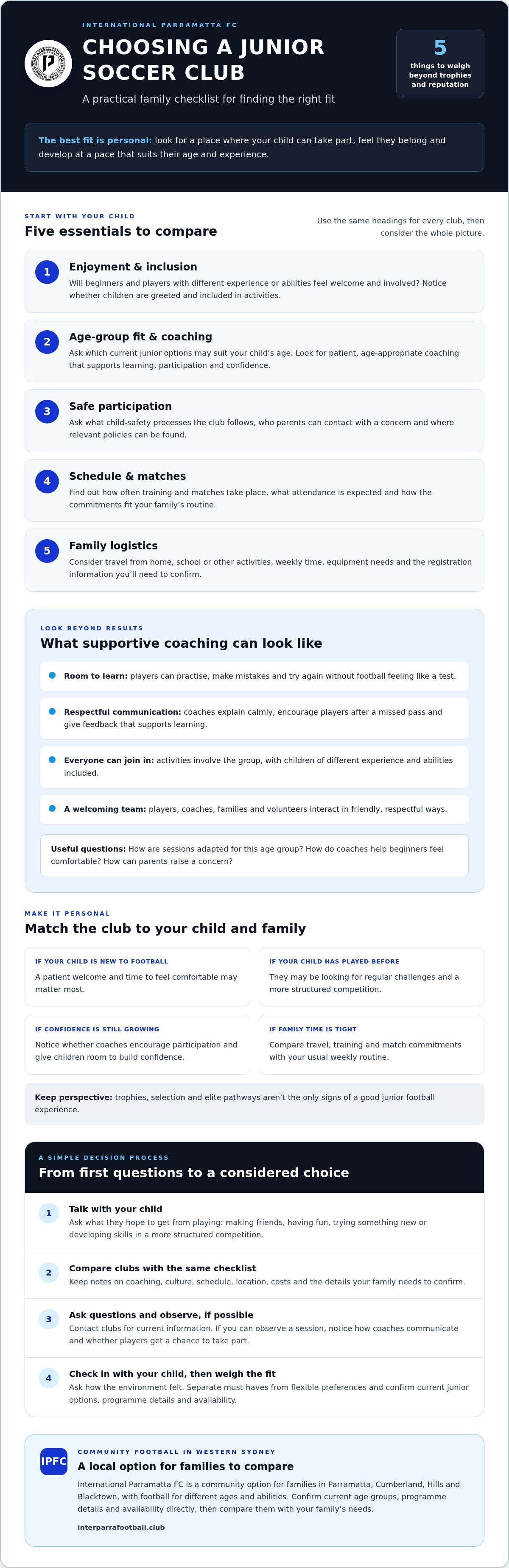
As you explore options across Parramatta and nearby areas, keep notes under a few practical headings. Ask each club the same questions and confirm current information before making plans.
Enjoyment and inclusion: How does the club welcome beginners and help players with different experience or ability levels feel involved?
Age-group fit and coaching: Which current junior options may suit your child’s age, and how do coaches support learning and participation?
Safe participation: What child-safety information and processes can the club explain to parents?
Schedule and matches: How often are training and matches, and what attendance expectations should your family know about?
Family logistics: Consider travel from home, school or other regular activities, weekly time, equipment needs and the registration information you’ll need to confirm.
Compare the whole picture, not just one appealing feature. A nearby club may make the weekly routine easier, while a welcoming team culture may matter most if your child feels unsure about joining. International Parramatta FC is a community option for families in Parramatta, Cumberland, Hills and Blacktown. The club offers football for different ages and abilities. Check current age groups, programme details and availability directly, then compare them with your family’s checklist.
How can coaching and team culture help junior players thrive?
A child’s experience is shaped not only by what happens during a session, but by how they’re treated while learning. Patient, age-appropriate coaching gives young players room to practise, make mistakes and try again. That can help football feel enjoyable rather than like a test, especially for children who are new, shy or still building confidence.
As you decide what to look for in a junior soccer club, watch how coaches speak to players and whether everyone gets a chance to join in. Calm explanations, encouragement after a missed pass and activities that keep the group involved can tell you more than a team’s results. The Positive Coaching Alliance offers resources on creating a positive, character-building youth sports culture, which can be a helpful lens as you observe.
Questions to ask about coaching and player development
Ask how sessions for your child’s age group balance basic football skills with movement, teamwork and enjoyment. Find out how coaches help beginners or children who need time to feel comfortable. You might also ask how they give feedback: is it specific and encouraging, or mainly focused on mistakes and results?
It’s reasonable to ask how parents can share a concern and who to speak with. A clear, approachable answer helps you understand how communication works before the season gets busy.
Signs of an inclusive and supportive team environment
Team culture often shows up in small, everyday moments. Notice whether players are greeted, whether children with different experience and abilities are included in activities, and whether coaches and teammates offer encouragement. Friendly, respectful interactions between families and volunteers can also help a new player feel part of the group.
Safeguarding is a sensible topic for every family to raise. Ask what child-safety processes the club follows, who you can contact with a concern and where to find relevant policies. Requirements and guidance can change, so check current information with the appropriate NSW authorities rather than relying on assumptions or outdated advice.
Look for: patient explanations, respectful language and fair chances to participate.
Ask about: age-appropriate sessions, support for less-confident players, feedback and parent communication.
Confirm: the club’s child-safety processes and how to raise a concern.
One session is only a snapshot, so consider what you observe alongside the club’s answers to your questions. If you’re considering a local option, you can explore International Parramatta FC’s junior football options and confirm current programme details directly.
How do you compare junior soccer clubs in Western Sydney?
Once you know what matters to your child, compare clubs using the same questions for each. A side-by-side view helps you weigh coaching, team culture and family commitments without assuming one club will suit every player. The right choice fits your child’s interests and your household’s weekly routine.
Compare weekly commitments and practical logistics
Look at the whole schedule, not just the training day. Ask about match days, season timing and expected attendance, then confirm current venues with each club. Work out how the trip fits around school, work and other activities. For families comparing options in Parramatta, Cumberland, Hills and Blacktown, travel between suburbs may affect how manageable regular participation feels.
Also ask what competition format the team follows and what players are expected to do during matches. Arrangements can differ between clubs and programmes, so seek current details rather than relying on another family’s experience. A clear picture of the commitment helps you decide whether the season will work for your child and household.
Understand costs, equipment and what registration covers
Request a current fee breakdown and ask what registration covers, including whether association membership, insurance or competition entry is included. Don’t assume every club handles these items in the same way. Check uniform requirements, equipment needs and any other expenses, then compare the overall season commitment rather than focusing only on the registration amount.
Keep your notes together as you compare. A club that suits your child’s goals also needs to fit your family’s schedule and budget. Confirm unclear details directly with the club before making plans, so your decision is based on current information rather than estimates.
What should you ask or observe before choosing a junior club?
A quick visit can turn a club’s description into something you and your child can assess together. Contact the club, ask about the details that matter to your family, and find out whether you can observe a session or match. Afterwards, talk with your child about how the experience felt before deciding what to do next.
A visit can show you how a club welcomes children, supports their participation and communicates with families. It’s only a snapshot, but it can help you judge whether the environment feels organised, friendly and suitable for your child’s age and confidence.
Questions to ask before your child joins
Keep your first enquiry simple. Ask whether a new player can attend or try a session, and what information your family should bring. Confirm current junior age-group options, availability, schedule and the best way to follow up. These details can change, so check them directly rather than relying on old posts or another family’s experience.
It’s also reasonable to ask who looks after player welfare, how the club shares important information with parents and what to do if a concern comes up. Ask where you can read the club’s child-safety information and who to contact with a question. For requirements that may apply in NSW, check current guidance with the relevant NSW authorities instead of assuming one club’s answer covers every situation.
What to notice during a session or match
Look for clear instructions that suit the players’ ages. Do children understand what to do, and are they encouraged to have a go? Notice whether activities give different players a chance to participate, and whether coaches and others speak respectfully when a child makes a mistake or needs help.
Take in the wider setting too. Does the session feel reasonably organised? Are families greeted or given a clear idea of where to watch? You’re not judging a club on a perfect practice. You’re looking for signs that children are treated with care and can take part without feeling overlooked.
Before: Contact the club and confirm trial arrangements, current age options, availability and schedules.
During: Observe the instructions, participation and interactions across the group.
After: Ask your child what they enjoyed, what felt uncomfortable and whether they’d like to return.
Your child’s response matters. If they’re unsure, ask what might help them feel more comfortable, then follow up with the club if you need clarification. To ask about current junior options, contact International Parramatta FC and discuss what may suit your family.
How can families take the next step with a junior football club?
You’ve compared the options and heard your child’s thoughts. Now bring your notes together. Separate the factors your family needs from the ones you can be flexible about. A supportive team culture or suitable age group might be essential, while a particular training day could be a preference rather than a deal-breaker.
Choose the club that fits your family’s priorities
Before making plans, revisit what your child wants from playing, how confident they feel and what kind of environment helps them enjoy taking part. Consider their interest in competition alongside practical realities such as location, timing, transport and other family commitments. A club that looks ideal on paper may not work with your routine, while a less obvious option might feel comfortable and manageable.
Use your notes to make a short list of must-haves and flexible preferences. Then confirm current junior age groups, programme details, schedules and availability directly with each club. These details can change, so information from a past season or another parent may not reflect what’s currently offered. If your first choice doesn’t feel like the right match, keep exploring. Finding a suitable community club matters more than rushing into a decision.
Explore a local community football option
International Parramatta FC is a community club for families in Parramatta, Cumberland, Hills and Blacktown. It offers football for children from age three through to adults, for males and females, with a range of abilities. Its welcoming Christian ethos aims to bring people from diverse cultural backgrounds together through football.
That community focus may be worth considering if belonging and shared enjoyment matter to your family alongside football development. As with any club, check current junior programme details and age-group options directly. Don’t assume a programme, team or place is available until the club confirms it.
Before you get in touch, write down the questions you still need answered. Ask which current junior options could suit your child, what participation involves, and where to find up-to-date information about schedules and registration. That gives you a straightforward next step without committing before you have the details.
The best answer to what to look for in a junior soccer club reflects your child and your family, not someone else’s idea of the perfect football experience. If you’d like to explore a local community option, contact International Parramatta FC about junior football to ask about current programmes and participation options.
Take the next step towards a good-fit club
The best choice is one that helps your child feel comfortable taking part and fits your family’s everyday routine. Keep your priorities in view: your child’s interests, a welcoming team environment and practical details such as schedules and travel around Parramatta, Cumberland, Hills and Blacktown.
You don’t need every answer before making an enquiry. A conversation with a local club can help you confirm current junior options, programme details and what participation involves.
International Parramatta FC is a community club in multicultural Parramatta, with football for players from age three through to adults, alongside seasonal teams, summer soccer and holiday clinics. Its welcoming Christian ethos brings people from diverse cultural backgrounds together through football. Check directly which current options may suit your child and family.
Ask International Parramatta FC about junior football and take a simple next step. Your child’s football journey can begin with a friendly conversation and the chance to find a place where they feel they belong.
Frequently Asked Questions
What should I look for in a junior soccer club?
Look for a club where your child can participate, feel welcome and learn at a suitable pace. Consider whether the age group fits, how coaches communicate, whether players with different experience levels are included, and how training and matches fit your family’s routine. Ask about child-safety processes, schedules, equipment and registration inclusions too. A club’s reputation can help you make a shortlist, but your child’s needs should guide the final choice.
How do I know if a soccer club is right for my child?
A club may be a good fit if your child feels comfortable in the environment and is interested in coming back. If possible, observe a session and notice whether instructions are clear, players are treated respectfully and children get involved. Afterwards, ask your child what they enjoyed and whether anything felt uncomfortable. Balance their response with practical considerations such as travel, timing and the family’s other commitments.
What questions should I ask before joining a junior football club?
Ask which current age groups and programmes may suit your child, whether there’s availability, and what the training and match schedule involves. Check what registration covers, what equipment or uniform is needed, and how the club welcomes new players. You can also ask who handles player welfare, how the club communicates with families and who to contact if you have a concern. Confirm details directly, as arrangements can change between seasons.
Is community soccer suitable for beginners?
Community soccer can suit beginners, but the best way to find out is to ask each club how it welcomes players who are new to the game. Find out how sessions support children who are still building confidence and whether players with different abilities can take part. Clubs may vary in their approach, so avoid assuming every programme is the same. A welcoming first experience can help a child decide whether they’d like to keep playing.
How much does junior soccer registration cost in Western Sydney?
There isn’t one fee that applies to every junior club in Western Sydney. Costs and inclusions can vary by club, competition, season and age group, so ask for a current breakdown before deciding. Check whether the quoted amount includes relevant association or competition charges, and ask about uniform, equipment or other expenses. Families in Parramatta, Cumberland, Hills and Blacktown should confirm fees directly with the club they’re considering.
How can I check whether a junior soccer club is safe?
Ask the club what child-safety processes it follows, who is responsible for player welfare and how parents can raise a concern. Find out where to read its policies and how families receive important safety information. You can also observe whether adults communicate respectfully and whether children seem supported during activities. For current NSW guidance or requirements, check with the relevant NSW authorities rather than relying on assumptions or outdated information.
Can my child try a soccer club before registering?
Some clubs may allow a prospective player to observe or try a session, but arrangements differ, so ask before attending. Check whether your child can participate, what information to bring and whether any conditions apply. If a trial session isn’t available, ask whether you can watch and speak with a club contact about the programme. International Parramatta FC serves Parramatta, Cumberland, Hills and Blacktown, so contact the club to confirm current junior options.


Comments