
Sydney Football for 3-Year-Olds: A Parent's Guide
What if your three-year-old’s first football experience is less about scoring goals and more about chasing a ball, having a go and feeling at ease? If you’re searching for “football for 3 year olds sydney”, you may be wondering whether your child is ready or whether organised sport will feel too structured.
At this age, a positive start is about playful movement, growing confidence and enjoying the experience, not getting everything right. Children develop at their own pace, so it’s fine if your little one wants to watch, stay close or join in gradually.
This guide explains what a welcoming first football experience can look like and how to choose a suitable local option. International Parramatta FC’s Inter Tots program is for children from three years of age and runs at PH Jeffery Reserve in North Parramatta. You’ll also find practical pointers for considering readiness, preparing for a first visit and helping your child feel included.
Table of Contents
Football for 3-year-olds in Sydney: what should a first experience look like?
How football activities can suit a three-year-old’s attention and confidence
Casual football play or a community club: which starting point fits your family?
Starting football with International Parramatta FC and finding your next step
Football for 3-year-olds in Sydney: what should a first experience look like?
Children reach new milestones at different speeds, and there’s no single sign that says a three-year-old is ready for football. Some will run towards the ball straight away; others may want to stay beside a parent and watch. Beginners are welcome. A first introduction should feel like play, with room to explore movement and get familiar with a ball, rather than a test of skill or performance.
At this age, attention and enthusiasm can change quickly. A child might join in, take a break, then return to the activity. That’s normal, not a sign they’ve failed or aren’t suited to football. A welcoming first experience makes space for different temperaments and lets children participate in their own way. For families exploring football for 3 year olds sydney, look for an age-appropriate atmosphere where trying things matters more than getting them right.
A good first-session goal is simple: enjoy moving, play with the ball and feel included. Offer calm encouragement without pushing your child to join every activity. A familiar grown-up nearby and the freedom to take things slowly can make a new group feel less daunting.
What can a three-year-old get from football?
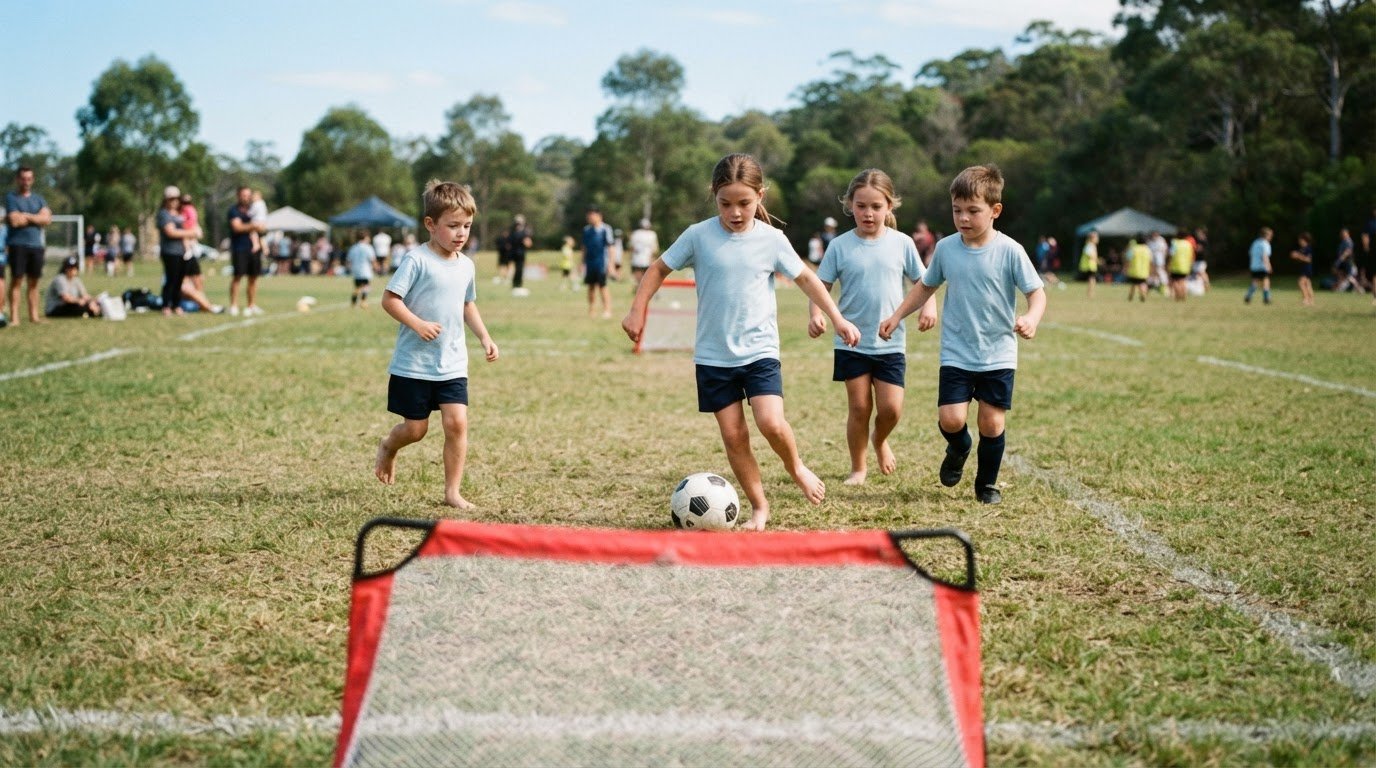
Football play can invite children to run towards a ball, give it a gentle kick, stop it with a foot or follow a simple cue such as “let’s take the ball over there”. These actions let them explore how their bodies and the ball move together without needing to learn formal techniques. In a group, taking turns and noticing when someone else has a go can also become part of the experience. Every child responds differently, so think of these as opportunities for play, not guaranteed outcomes.
Does a three-year-old need football experience already?
No previous experience is needed. A three-year-old doesn’t have to know the rules, name a skill or kick accurately before joining in. Curiosity is enough to start. They might chase the ball, hold back or watch other children first. Give them time to get comfortable; joining in after observing is a perfectly valid start. Notice what catches their interest and follow their lead rather than expecting polished skills.
A first session can be worthwhile even if your child only tries one activity or spends some of it watching. Keep expectations light and treat each small moment of participation as part of getting familiar with a new setting. If they leave smiling, curious or more comfortable around the ball, that’s a lovely beginning.
How football activities can suit a three-year-old’s attention and confidence
A three-year-old’s focus can come and go, especially in a new place with other children and plenty to see. Simple activities that change naturally can be easier to enjoy than long drills that repeat the same movement. The aim isn’t to keep every child busy every moment. It’s to offer inviting ways to move, pause and have another go.
At this age, a ball is something to explore. It may roll away, wobble under a foot or head in an unexpected direction, and that’s part of the fun. There’s no need to introduce advanced skills or tactics. A child might kick, chase, stop and start, then take a breather. Adults can keep the mood relaxed by giving one simple invitation at a time and allowing each child to respond in their own way.
Playful football gives children room to explore; formal coaching teaches specific skills in a planned sequence. For a toddler, playful activities can leave more room for curiosity, comfort and changing energy. A welcoming group allows for encouragement, rest and flexibility rather than treating every activity as something a child must complete.
What kinds of football play are age-appropriate?
Keep it straightforward: roll a ball across a clear space, invite your child to give it a gentle kick, or walk together as you follow where it goes. Try one-step prompts such as “roll it to me” or “let’s follow the ball”. If a group activity involves taking turns or moving towards a ball, a child might watch, join with a parent nearby or have a brief turn. These are ideas for relaxed play, not a set programme every child needs to follow.
How can parents support a shy or hesitant child?
Arrive calmly and let your child look around before inviting them to join. They may feel more settled after watching other children, seeing the space or staying close to you for a while. Praise small efforts such as taking a step, moving towards the ball or sharing a turn, rather than focusing on goals or scores. Some children need more than one visit to feel at home, so keep the invitation gentle and follow their cues.
If your child needs a pause, offer a quiet moment and let them decide whether they’d like to return to the activity. Avoid comparing their participation with another child’s; confidence looks different from one little person to the next. Families can explore International Parramatta FC football as a local community option.
Casual football play or a community club: which starting point fits your family?
There’s no single right route into football. Kicking a ball around at home or at a local park gives you flexibility, while a community club adds a regular setting and the chance to meet other families. Neither choice measures your child’s talent or commits them to a future football pathway. Think about what feels comfortable for your child and workable for your household right now.
Use three simple questions to weigh up the options:
Routine: Would a regular activity fit your family’s week, or would you rather keep ball play spontaneous?
Social setting: Does your child enjoy being around other children, or feel more at ease exploring with familiar people?
Commitment: Are you ready for an organised club setting, or would you prefer to begin casually?
Your answers might change over time, and that’s fine. A casual start doesn’t close the door on a club, and choosing a club doesn’t mean your child needs to be certain they love football already. For parents researching football for 3 year olds sydney, the most useful starting point is the one that makes participation manageable, not the one that sounds most ambitious.
When might casual ball play be the right first step?
Casual play can be a low-pressure way to see whether your child enjoys moving with a ball. Try a short game in the backyard or at a park you already visit: roll the ball, take turns kicking it or follow it together. There’s no need to set up formal practice or keep going once their interest fades. If they ask to play again or seem curious about other children joining in, you can consider an organised activity later.
When might community football suit your child?
A local club may appeal if your child enjoys shared activities or your family would value a regular community setting. Meeting other children can make football a social experience as well as a chance to move and play. Look for a welcoming atmosphere and expectations suited to young beginners, rather than an emphasis on results. International Parramatta FC is a community club with programmes for players from age three to adulthood. Its Inter Tots program gives three-year-olds a local starting point.
Notice what your child does after playing: do they talk about the ball, ask to go back or seem content with a short turn? These clues can guide your next choice without turning it into a pass-or-fail decision. If they’re unsure, keep playing casually for now. If they’re keen to share the activity with others, a community setting may be a natural next step. Let your family’s routine and your child’s interest lead.

Checklist: Getting Your 3-Year-Old Ready for Football
A little preparation can make a first visit feel more familiar for both of you. Readiness doesn’t mean your child can follow every instruction or stay involved throughout. For families considering football for 3 year olds sydney, use this checklist to think about comfort, interest and practical basics, not whether your child is already “good at” football.
How can you tell your child is ready to give it a go?
Look for curiosity, not polished skills. Your child might enjoy running, kicking a ball or playing near other children. They don’t need to know rules or techniques. Interest can change from one day to another, so a hesitant mood on one occasion doesn’t have to be a final decision. The useful question is whether they’re open to giving the experience a try.
What should families prepare for a first visit?
Keep the plan simple. Choose clothes and footwear that let your child move comfortably, bring water and consider sun protection suited to the weather. Before you go, explain in plain language what they may see and do. Let them know they can take their time and that watching is a perfectly fine way to begin.
Notice their interest. Have they shown curiosity about kicking, chasing or moving with a ball? That’s enough to explore a first session. There’s no need to wait until they can follow rules or demonstrate a particular skill.
Choose comfortable clothes. Pick something that allows easy movement and footwear suited to active play. Familiar clothes can help your child feel at ease and keep the visit low-pressure.
Pack a drink. Bring water so your child can have a drink if they need one. A familiar drink bottle can also be reassuring in a new setting.
Plan for the conditions. Consider the weather and prepare suitable sun protection. A hat, shade or sunscreen may be useful depending on the conditions and your family’s usual approach.
Explain the visit gently. You could say, “We’ll see some children playing with a ball. You can watch, have a go or stay with me.” This gives your child a simple picture of what to expect without making participation sound compulsory.
On the day, leave room for a change of heart. Your child may be keen at home but quieter in a new place, or happy to join in after watching for a while. Neither response means you’ve prepared poorly. Keep your tone relaxed, follow their cues and focus on making the visit manageable for your family.
For a local starting point, view International Parramatta FC’s registration information and learn about the Inter Tots program for children from three years of age.
Starting football with International Parramatta FC and finding your next step
For families in western Sydney, a local community club can offer a place to share sport and feel part of a wider group. International Parramatta FC serves Parramatta, Cumberland, the Hills and Blacktown, with programmes for players from age three through to adults. Its Inter Tots program is designed for three-year-olds and runs at PH Jeffery Reserve in North Parramatta.
Football for 3 year olds sydney families are considering doesn’t need to be about finding a future star. It can simply be a chance to take part in a local setting alongside other families. International Parramatta FC runs seasonal football teams, summer soccer and holiday clinics, as well as Inter Tots for children from age three.
What makes a local community club a welcoming first step?
A community setting can bring children and families together around a shared activity, with participation and belonging taking priority over early results. Look for an atmosphere where children are welcomed as they are, whether they’re ready to join in straight away or need time to settle. International Parramatta FC welcomes people from diverse cultural backgrounds and is guided by a Christian ethos, bringing its community together through football.
For a wider perspective on joining a local club, the community football guide offers further context. Consider what matters to your family: a welcoming environment, an activity suited to your child’s age and a routine that works for you. You don’t need to decide how far your child might go in football. The first step can simply be sharing an enjoyable experience.
How can families take the next step in western Sydney?
Start with your child’s age and your family’s interests, then explore the club’s registration information for Inter Tots. International Parramatta FC also runs seasonal teams, summer soccer and holiday clinics for its wider community. Choose an activity that fits your child’s age stage and your family’s routine.
If organised football feels like a big step, keep the introduction simple. Talk with your child about playing with a ball and explain what a group activity might involve. You can help them become familiar with the idea while leaving room for them to decide how they feel about taking part.
Explore International Parramatta FC and find out about Inter Tots and the club’s registration process.
Let your child’s first step be their own
A first football experience doesn’t need to set a direction for the years ahead. It can simply be a family outing, with room for your child to discover what feels enjoyable and for you to see how they respond. If they come away curious, you can build on that interest. If they’re unsure, there’s no rush to turn one visit into a decision.
For families exploring football for 3 year olds sydney, a welcoming local club can make that first step feel more connected. International Parramatta FC brings local families together through football across Parramatta, Cumberland, the Hills and Blacktown. Its Inter Tots program gives children from age three a place to start.
Explore International Parramatta FC and find a welcoming way to get involved. Let your child’s interest lead. A little curiosity is a lovely place to start.
Frequently Asked Questions
Is three too young to start playing football?
No, three isn’t automatically too young, though children differ in how comfortable they feel with a new activity. Notice how your child responds to movement and new people in everyday settings, such as a playground or playgroup. If they seem unsure on the day, that doesn’t rule out trying again later. Choose an introduction that feels relaxed for your child and manageable for your family.
Can a three-year-old join football without any experience?
Yes, a child can begin without knowing football rules or having played before. There’s no need to practise at home first or teach them special techniques. If it helps, bring a ball out during ordinary play so it feels familiar, but that’s optional. The first visit is a chance to encounter a new activity, not to show what they can already do or keep pace with more experienced children.
What should football for a three-year-old involve?
It should feel suitable for a young beginner, with straightforward chances to move and interact with a ball rather than pressure to perform. For football for 3 year olds sydney families are considering, look for simple instructions and an atmosphere where children can take part at their own comfort level. International Parramatta FC’s Inter Tots program is for children from age three.
How long can a three-year-old usually focus on football activities?
There’s no set attention span that applies to every three-year-old, so avoid measuring the experience by how long your child stays involved. You might notice them looking away, asking for a drink or wanting to sit beside you. These can be cues to pause rather than push on. Let your child’s energy guide your expectations, and remember that an activity can still be a positive introduction even if their interest comes and goes.
What should my child wear to a first football session?
Choose comfortable clothes that let your child move freely and footwear they can wear confidently for active play. Consider the weather when deciding whether to bring an extra layer, and plan sun protection for outdoor conditions. Keep the outfit familiar and practical, rather than making the first visit feel like a special test.
Can parents stay with their child during a first football activity?
Stay close to help your child settle, and follow the activity’s arrangements once it begins. If your child is more comfortable with you nearby, let them know you’ll be there to support them as they get used to the new setting. A familiar adult’s calm presence can make a first visit feel less daunting.
Where can families find football for three-year-olds in western Sydney?
International Parramatta FC is a community club serving families across Parramatta, Cumberland, the Hills and Blacktown. Its Inter Tots program is for children from three years of age and runs at PH Jeffery Reserve in North Parramatta. Families can explore the club’s registration information to take the next step.

Comments