
Soccer Club for Shy Kids in Sydney: Welcoming Family Guide
What if your child could belong on a football team without needing to be the loudest one on the field? Looking for a soccer club for shy kids sydney families can feel good about often starts with one worry: will my child feel overwhelmed at their first session?
It’s understandable to want a gentle start. A quieter child may need time to watch, warm up and join in at their own pace. Beginners don’t need a high-pressure environment to enjoy football. A supportive community team can make room for different personalities and abilities, with connection and enjoyment alongside performance.
This guide explains what to look for in a welcoming, age-appropriate club and how to prepare your child for a first taste of the game without pressure. You’ll also find practical ways to help them settle in, plus an introduction to International Parramatta FC, a community club based in Parramatta with seasonal teams, summer soccer and holiday clinics for players of different ages and abilities.
Table of Contents
Soccer for shy kids in Sydney: what a welcoming first step can look like
How football can help shy kids build comfort through familiar routines
Community football or elite coaching: which setting suits a shy beginner?
A low-pressure plan for helping your shy child try soccer in Sydney
Finding a welcoming soccer club for shy kids around Parramatta
Soccer for shy kids in Sydney: what a welcoming first step can look like
Joining a new group can feel daunting for a quieter child. There are unfamiliar faces and activities to follow, and the possibility of making a mistake in front of others. Nerves don’t tell you whether your child has sporting potential or a genuine interest in football. They may simply need time to feel at ease.
Supportive community football gives a reserved beginner room to take part, learn and find their place without needing to be outgoing or perform straight away. Look for an age-appropriate setting that welcomes different abilities and values enjoyment as well as learning. Feeling included can matter as much as scoring goals or winning.
Why a child might hesitate to join a soccer team
A child may worry about being watched, not knowing what to do or getting something wrong. They might enjoy kicking a ball at home but feel unsure about doing it with a group. Listen for what sits behind the hesitation rather than labelling them difficult or unmotivated. Try asking, “What part feels tricky?” or “What are you wondering about?”
Nerves may ease as a child gets used to the idea of joining in. A clear, repeated reluctance may also mean they’re not interested right now. Take their feelings seriously either way. Give them space to talk, and avoid treating shyness as a problem that football must fix. Sport psychology considers how thoughts and feelings relate to sport, including enjoyment and participation, not just performance.
What belonging can mean in community football
Belonging doesn’t have to begin with a big introduction or instant friendships. A child might first watch, stay close to a familiar adult or join one activity before feeling ready to do more. These small steps can help them get used to the group at their own pace, and they still count as part of the experience.
For parents searching for a “soccer club for shy kids sydney”, look beyond team results. Consider whether the club welcomes beginners and different abilities, and whether its programmes suit your child’s age and interests. International Parramatta FC is a community club in multicultural Parramatta, with programmes for different ages and abilities beginning at age three. Seasonal teams, summer soccer and holiday clinics give local families different ways to take part. A community setting can make enjoyment and connection part of the game alongside learning.
How football can help shy kids build comfort through familiar routines
A new team can feel like a lot to take in at once. Familiar patterns may help a child understand where to go, what activity comes next and how to take part. Repeating simple activities can make a session feel more predictable, leaving a child more space to decide whether they’d like to join in. Every child settles in differently, so treat routines as a possible support, not a guarantee.
Small moments that can make a new team feel more familiar
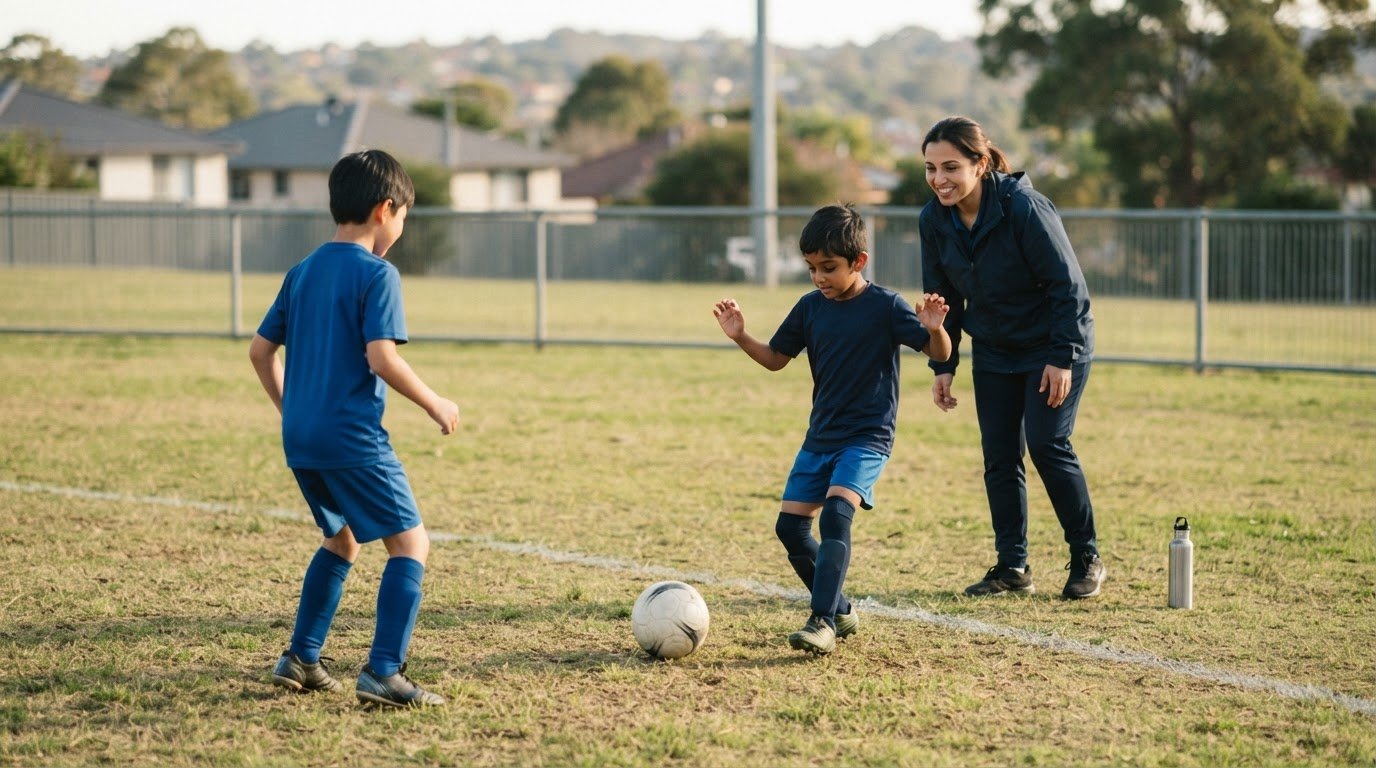
Getting comfortable doesn’t mean joining every activity straight away. A child might first watch from nearby, then recognise a teammate, try a simple activity or take part in a familiar routine next time. These small steps create opportunities to interact without putting them on the spot.
Shared tasks can make conversation feel more natural, too. Passing a ball back and forth gives two children something to focus on together; helping gather equipment can create a brief moment to work alongside others. Let your child’s interest and pace guide you, rather than comparing their progress with another player’s.
Supportive football makes room for a child to take part without asking them to become outgoing.
Confidence, friendship and football: realistic expectations
With positive experiences over time, a child may feel more comfortable trying an activity, asking a question or joining a teammate. Confidence can grow gradually, but it isn’t a guaranteed result of playing football. Shared activities may also open the door to friendship, though connections develop in their own time.
Saybrook University’s overview of the Mental Health Benefits of Playing Sports discusses possible wellbeing and social benefits of sport for children. It’s useful context, not a promise about how any one child will feel. Ask what your child liked, what felt uncomfortable and whether they’d like to try again.
For families considering a soccer club for shy kids sydney, a community setting can offer football as shared recreation as well as a chance to learn. International Parramatta FC brings people from diverse backgrounds together through football in Parramatta. Explore its community football programs to learn about the club’s programmes.
Community football or elite coaching: which setting suits a shy beginner?
There’s no single right kind of football for every child. A community club generally centres on participation, learning the game and being part of a local group. A performance-focused programme places more emphasis on developing skills and pursuing higher levels of play. Neither is automatically better. The right fit depends on what your child enjoys and hopes to get from football.
Organised sport can offer children social and emotional benefits, as discussed in the American Academy of Pediatrics’ Organized Sports for Children, Preadolescents, and Adolescents. That’s useful context, not a promise about how a particular child will respond. For a beginner who feels unsure, prioritise enjoyment and an age-appropriate introduction to keep the first step manageable.
Signs a community club may suit a quieter child
Consider community football if your child wants to play, learn and share an activity with others without making performance the only measure of success. Look for a club that welcomes varied abilities and values participation. International Parramatta FC is a community club in Parramatta with programmes for different ages and abilities, bringing people from diverse backgrounds together through football.
When a more performance-focused programme may be a better fit
If your child is excited by focused skill development and wants to work towards higher levels of play, a performance-oriented setting may suit their interests. For example, Focus Football Development’s Sydney material highlights player development and pathways. That’s a different emphasis, not a judgement on either approach. Talk with your child about what sounds enjoyable rather than assuming they want the most competitive option.
If you’re weighing up a soccer club for shy kids sydney families can consider, start with what would make football enjoyable and manageable for your child. Their preference may change as they learn more about the game, and that’s fine. The aim is to find a setting that fits the child in front of you.

A low-pressure plan for helping your shy child try soccer in Sydney
A little preparation can make trying football feel less like a big leap. Keep the aim simple: help your child picture what they might encounter, listen to their preferences and leave room for them to decide how they feel afterwards. You’re not trying to guarantee they’ll love it straight away. You’re making the first step easier to imagine.
Before the first football session
Start with a calm chat when there’s no rush. Ask what interests your child about football and whether anything feels worrying about joining a group. They might be curious about kicking the ball but nervous about meeting new people. Listen without dismissing their concerns or trying to talk them into feeling excited.
Explain what you know in simple terms, while making room for activities to vary. You might say they’ll be joining other children to play football, learn and have a go, without promising a particular session format. Let them help with practical choices, such as what comfortable sports clothes to wear or what they’d like to bring. For more preparation ideas, use this football coaching clinic parent checklist. If you’re planning around school holidays, the Parramatta school holiday sports guide may also help with family planning.
After trying football: talk without adding pressure
Once you’re home, give your child time to settle before asking about the session. Try open questions such as, “What did you enjoy?”, “Was anything different from what you expected?” or “Would you like to try again?” They may share a lot or only a little. Both are fine.
Use a simple plan to keep the experience child-led:
1. Talk it through. Ask what sounds fun and what feels uncertain.
2. Describe the first experience honestly. Share what you know about taking part without setting expectations about how your child will respond.
3. Let them have a say. Ask what might help them feel more comfortable and respect their pace.
4. Reflect together. Notice effort and curiosity rather than goals, sociability or instant confidence.
One session doesn’t have to decide everything. Your child may want another go, need more time or decide football isn’t for them right now. For families searching “soccer club for shy kids sydney”, a gentle, child-led approach keeps the focus on whether playing feels enjoyable. Explore International Parramatta FC football programs as a community option in Sydney.
Finding a welcoming soccer club for shy kids around Parramatta
For families in Sydney and Western Sydney, a nearby club can make football easier to fit into everyday life. Consider travel alongside the club’s community focus and participation options. If you’re looking around Parramatta, you might also be comparing options across Cumberland, the Hills or Blacktown. Think about whether the location and programme fit your family’s routine and your child’s interest.
Why local community can matter when joining a team
A local club connects football with the area your family already calls home. Familiar surroundings may make the practical side of joining feel more manageable, though they won’t determine how your child feels about a team. Consider what would make regular participation work for your household, then explore options that match your child’s interest.
Summer soccer is separate from seasonal team registration and holiday clinics. If you’re considering it, the summer soccer competition guide can help you understand that format as part of your family’s planning.
Explore football with International Parramatta FC
International Parramatta FC is based in Parramatta and brings people from diverse cultural backgrounds together through football. Its community programmes are for children, young people and adults, with participation options beginning at age three and welcoming different ages and abilities. Families can explore seasonal teams, summer soccer and holiday clinics as distinct ways to take part.
For parents searching for a soccer club for shy kids sydney, a community setting may suit families prioritising enjoyment and being part of a local group, rather than focusing only on performance. An inclusive ethos can create an open invitation to participate, while each child’s experience remains their own. Let your child’s interests and comfort guide the next step.
If Parramatta feels like a good place to start, take a look at Explore International Parramatta FC and its football programmes.
Take the next step at your child’s pace
A quieter child doesn’t need to become outgoing before they can enjoy football. An age-appropriate setting, familiar routines and a gentle introduction can help them explore the game in their own time. Keep the focus on what they enjoy, listen to their concerns and treat one session as a first step, not a final verdict.
If you’re looking for a soccer club for shy kids sydney families can explore, International Parramatta FC is a community club with a multicultural ethos, based in Parramatta. Its programmes welcome different ages and abilities, starting from age three, with seasonal teams, summer soccer and holiday clinics as ways to take part.
Football can be a chance to learn, play and share a community activity. Explore International Parramatta FC’s football programmes and find a welcoming community option for your family in Parramatta, Cumberland, the Hills or Blacktown.
Frequently Asked Questions
Is soccer good for shy kids?
Soccer can be an enjoyable way for a shy child to take part in a shared activity, learn skills and spend time alongside other children. Familiar routines and simple team tasks may help some children feel more at ease, but every child responds differently. Football isn’t a treatment for shyness, and confidence or friendships aren’t guaranteed. Follow your child’s interests and keep enjoyment, choice and a comfortable pace at the centre.
How can I help my shy child feel comfortable at soccer?
Talk calmly about what your child is looking forward to and what feels uncertain. Describe what you know about the session without promising exactly what will happen, and let them help with practical choices such as what to wear. Afterwards, ask what felt fun, unfamiliar or worth trying again. Praise their willingness to explore rather than expecting them to talk a lot, score goals or feel confident immediately.
Should I make my shy child join a soccer team?
Avoid turning football into a demand, but gently explore the idea if your child shows interest. Ask what might make trying it feel more comfortable, explain that they can take time to get used to a new group, and listen if they’re not ready. One hesitant response doesn’t have to settle the question forever. Revisit it later if their interest changes, without making participation a test of bravery.
What should I look for in a soccer club for a shy beginner?
For a soccer club for shy kids in Sydney, look for community participation, age-appropriate activities and a welcome for different abilities and experience levels. Consider whether the focus suits your family’s priorities, such as enjoyment and learning rather than performance alone. International Parramatta FC is a community club based in Parramatta, serving families across Cumberland, the Hills and Blacktown as well as the wider local community.
Can a shy child play soccer if they have never played before?
Yes. A child doesn’t need previous football experience to explore whether they enjoy playing. International Parramatta FC welcomes participants across different ages and abilities, so a beginner’s lack of experience doesn’t by itself rule out taking part. Before starting, talk about what your child would like to try and what feels unfamiliar. Give them room to learn at their own pace, without comparing them with children who have played before.
What age can children start football at International Parramatta FC?
Children can start from age three at International Parramatta FC. The Parramatta-based community club offers programmes for different ages and abilities, with seasonal teams, summer soccer and holiday clinics among its participation options. These options offer different times and ways to take part, so families can consider what aligns with their child’s interests. The club also serves young people and adults across Parramatta, Cumberland, the Hills and Blacktown.

Comments